

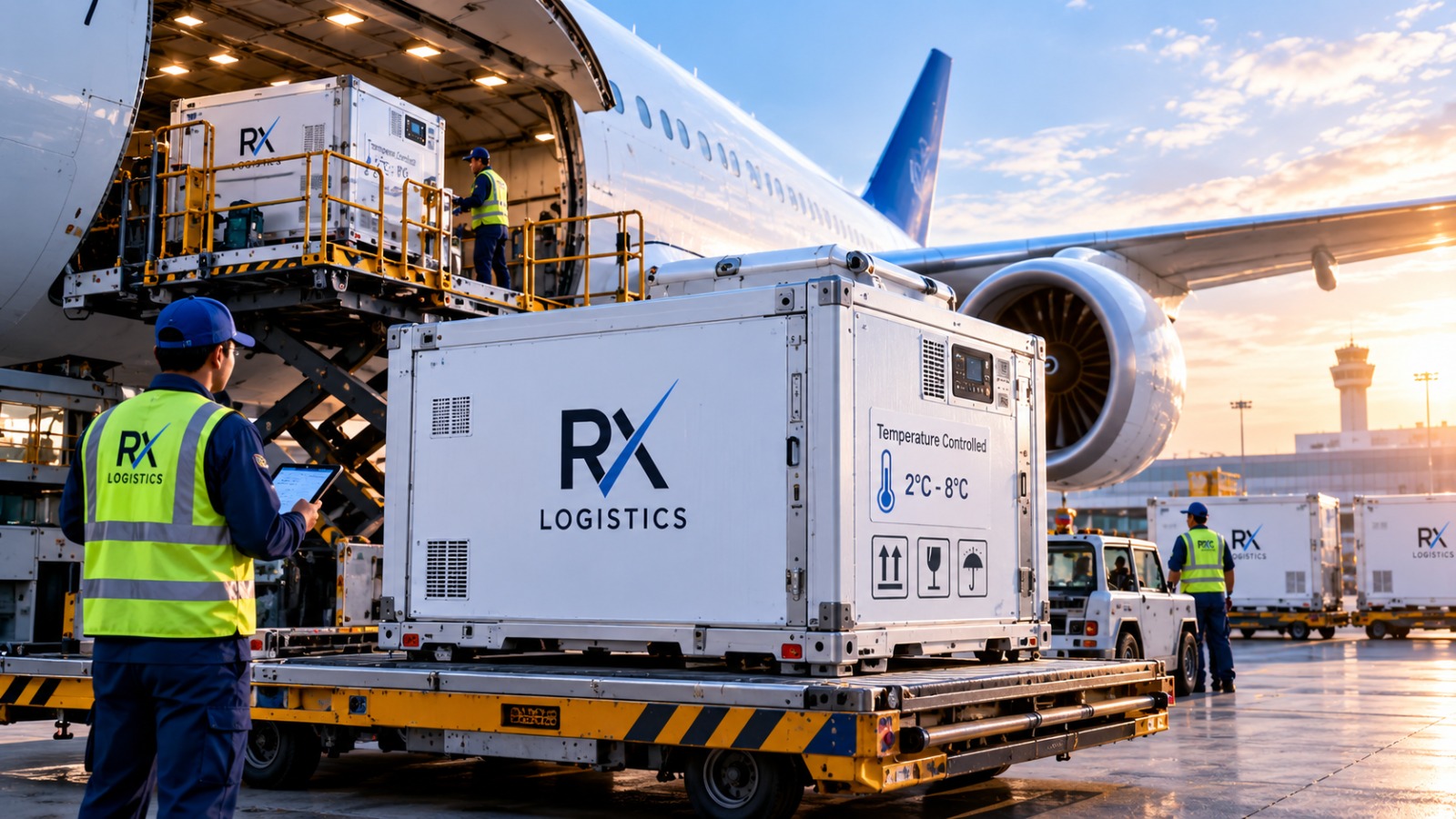
Operational Perspective
Time-critical pharmaceutical shipments require precise coordination, informed decision-making, and effective communication. Unlike conventional cargo, certain pharmaceutical and biological shipments must reach their destinations within strict operational timelines while maintaining rigorous handling and temperature conditions.
Successful time-critical logistics depends on far more than selecting the fastest available flight. It demands a holistic, door-to-door approach spanning pre-shipment documentation, airside tarmac access, customs pre-clearance, and active monitoring.
1. Understanding Time-Critical Pharmaceutical Logistics
Time-critical logistics applies to shipments where delivery delays can compromise patient treatment, clinical trial validity, or pharmaceutical production batches. Common scenarios include:
2. Why Transportation Planning Matters
Unexpected disruptions can occur at every stage: airport handling congestion, customs documentation queries, aircraft technical delays, or road traffic. Comprehensive pre-flight planning identifies transfer choke points, defines minimum connection times, and confirms consignee readiness before the package leaves the origin facility.
3. Choosing the Appropriate Transportation Mode
While priority air freight is standard for intercontinental lanes, dedicated direct-drive temperature-controlled ground vehicles are frequently faster and more dependable for regional distances up to 800 km, bypassing airport cut-off windows and cargo handling delays entirely.
4. Temperature Management During Urgent Shipments
Reducing transit time never justifies compromising thermal protection. A shipment that arrives with speed but suffers a temperature excursion can be deemed unusable by quality assurance. Robust packaging buffers (such as minimum 96h qualified passive shippers or active reefer containers) must be deployed regardless of estimated flight durations.
5. Documentation and Customs Readiness
Incomplete or mismatched export/import permits cause more delays than airline mechanical issues. Pre-clearance customs protocols, pre-checked commercial invoices, pro-forma declarations, and harmonized system (HS) classification verification must be completed prior to cargo pickup.
6. Shipment Visibility & Contingency Protocols
Real-time IoT visibility platforms ensure that logistics coordinators and client managers receive instant milestone confirmations (flight departure, tarmac offload, customs release). If a flight cancellation occurs, predefined contingency plans (backup flight reservations, pre-arranged airport cold room staging, dry ice re-icing stations) are triggered immediately.
7. RX Logistics' Approach to Time-Critical Cargo
RX Logistics operates a dedicated 24/7 priority desk managing next-flight-out (NFO) air freight, direct-drive temperature-controlled courier vehicles, airport tarmac escort coordination, and hands-on delivery supervision for time-critical life sciences shipments.
Conclusion: Speed Guided by Control
In pharmaceutical logistics, transit speed is only valuable when supported by the operational conditions, packaging engineering, and documented processes required to safeguard patient health.