

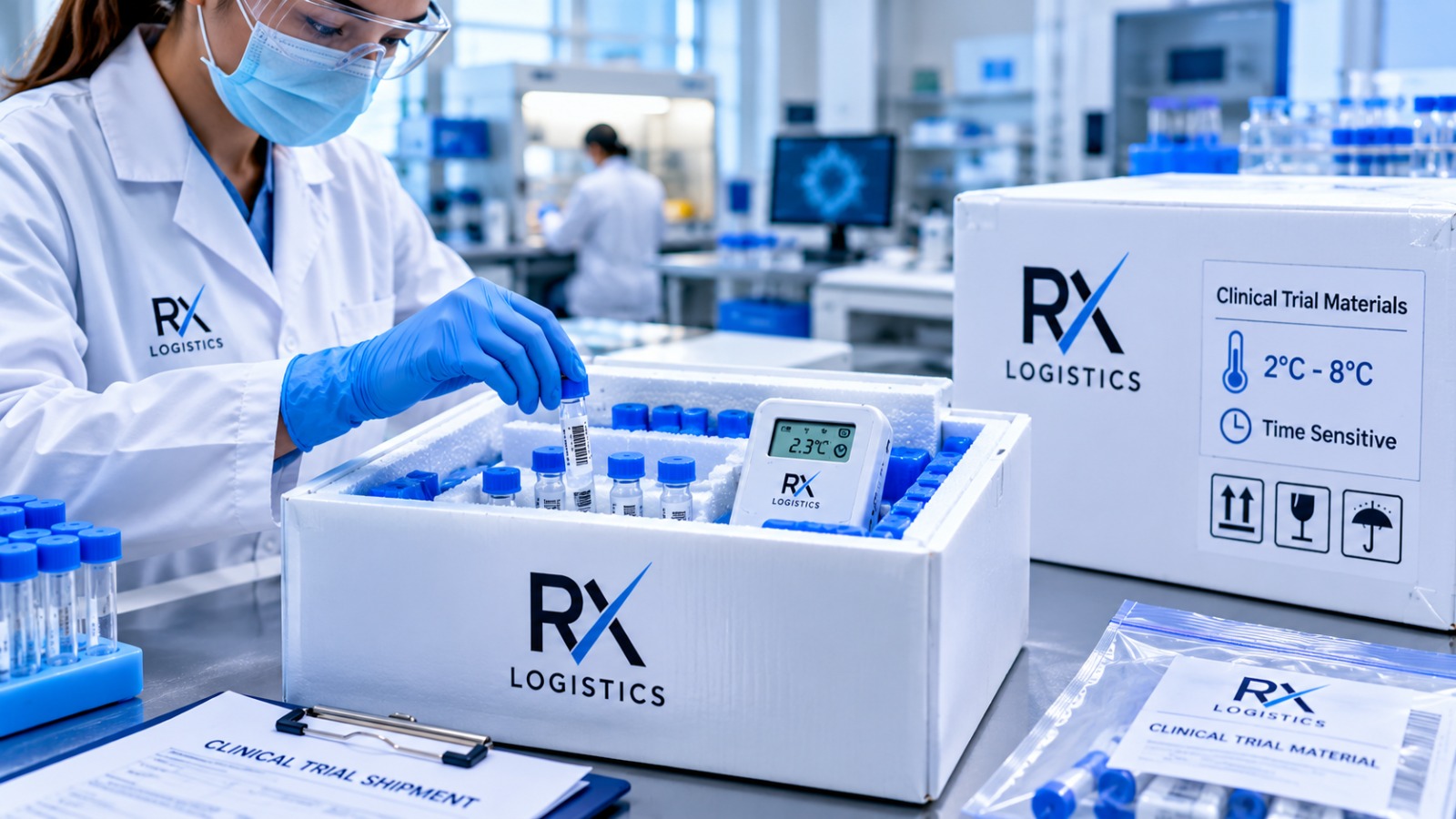
Clinical Research Perspective
Clinical trials depend on the timely and uncompromised delivery of investigational medicinal products (IMPs), biological samples, diagnostic test kits, and research supplies. Many of these materials require exact, uninterrupted temperature control to safeguard trial integrity and patient safety.
As clinical research programs become increasingly decentralized and globalized, specialized clinical logistics coordination forms the backbone of successful drug development.
1. Understanding Clinical Trial Cold Chain Logistics
Unlike commercial drug distribution where cargo moves in bulk pallets to wholesale distribution centers, clinical trial logistics involves small, highly customized parcels shipped directly to hospitals, investigator sites, and testing laboratories. Common payload categories include:
- • Investigational Medicinal Products (IMPs): Novel experimental chemical entities and biologics.
- • Biological & Patient Samples: Whole blood, serum, biopsy specimens, and cellular materials for central lab analysis.
- • Comparator Drugs & Placebos: Commercial control medicines requiring matched temperature regimens.
- • Specialized Lab Kits: Pre-packaged specimen collection containers with temperature-sensitive reagents.
2. Why Clinical Trial Shipments Require Specialized Handling
Strict Patient Schedules
Medications must arrive precisely in time for scheduled patient dosing appointments at clinical trial sites.
Irreplaceable Materials
Patient biopsy samples or rare early-phase experimental batches may be scientifically or medically irreplaceable.
Diverse Global Stakeholders
Coordination spans study sponsors, Contract Research Organizations (CROs), hospital pharmacies, and courier pilots.
Regulatory Accountability
Strict compliance with ICH Good Clinical Practice (GCP) guidelines and tamper-evident chain-of-custody documentation.
3. Packaging & Monitoring for Clinical Trial Cargo
Pre-qualified passive vacuum insulated panel (VIP) shippers are predominantly deployed for clinical parcels, offering 72-to-120 hour temperature stability across +2°C to +8°C, +15°C to +25°C, or dry-ice −80°C ranges. Calibrated single-use electronic data loggers accompany each shipper, providing instant PDF temperature reports upon arrival at hospital pharmacies for immediate study sign-off.
4. International Clinical Trial Transportation & Chain of Custody
Moving clinical materials across international borders requires specialized import permits, pro-forma clinical trial exemption letters, and dangerous goods declarations (e.g. UN 3373 Biological Substance Category B, or UN 1845 Dry Ice). Documented chain-of-custody receipts protect drug accountability records required by health regulatory inspectors.
5. How RX Logistics Supports Clinical Trials
RX Logistics provides clinical trial logistics coordination across investigational site deliveries, specimen retrieval, temperature-controlled packaging provision, customs clearance facilitation, and dedicated courier escorts—helping clinical research sponsors advance new therapies safely.
Conclusion: Safeguarding Medical Progress
Specialized clinical cold chain logistics is more than a transportation service—it is an integral operational pillar in the discovery, validation, and delivery of future medical breakthroughs.