
Advanced Therapy Overview
Cell and gene therapies represent an unprecedented revolution in modern medicine. These advanced therapeutic medicinal products (ATMPs) involve highly complex biological manufacturing processes, living cellular materials, and exceptionally stringent logistics protocols.
Unlike mass-manufactured chemical tablets, patient-specific autologous therapies require unbroken, time-critical coordination connecting the patient's collection bed, specialized cleanroom manufacturing suites, and hospital infusion suites.
1. Understanding Cell and Gene Therapies
Cell therapies utilize living human or engineered cells to fight diseases such as oncology indications, while gene therapies introduce, modify, or replace mutated genetic material. Because these products frequently consist of living cellular structures, their viability decays rapidly if exposed to thermal stress or excessive vibration.
2. Why Advanced Therapy Logistics Is Different
Many therapies require cryogenic vapor-phase liquid nitrogen storage at −150°C to −196°C to arrest cellular metabolism.
Apheresis starting materials frequently have strict 24-to-48 hour viability windows from patient collection to lab processing.
A lost autologous batch cannot be replaced from a warehouse shelf—it belongs to a severely ill patient waiting in a hospital ward.
An unbroken barcode/RFID connection guaranteeing the therapy created from Patient A is infused back into Patient A.
3. The Role of Cryogenic Dry Vapor Shippers
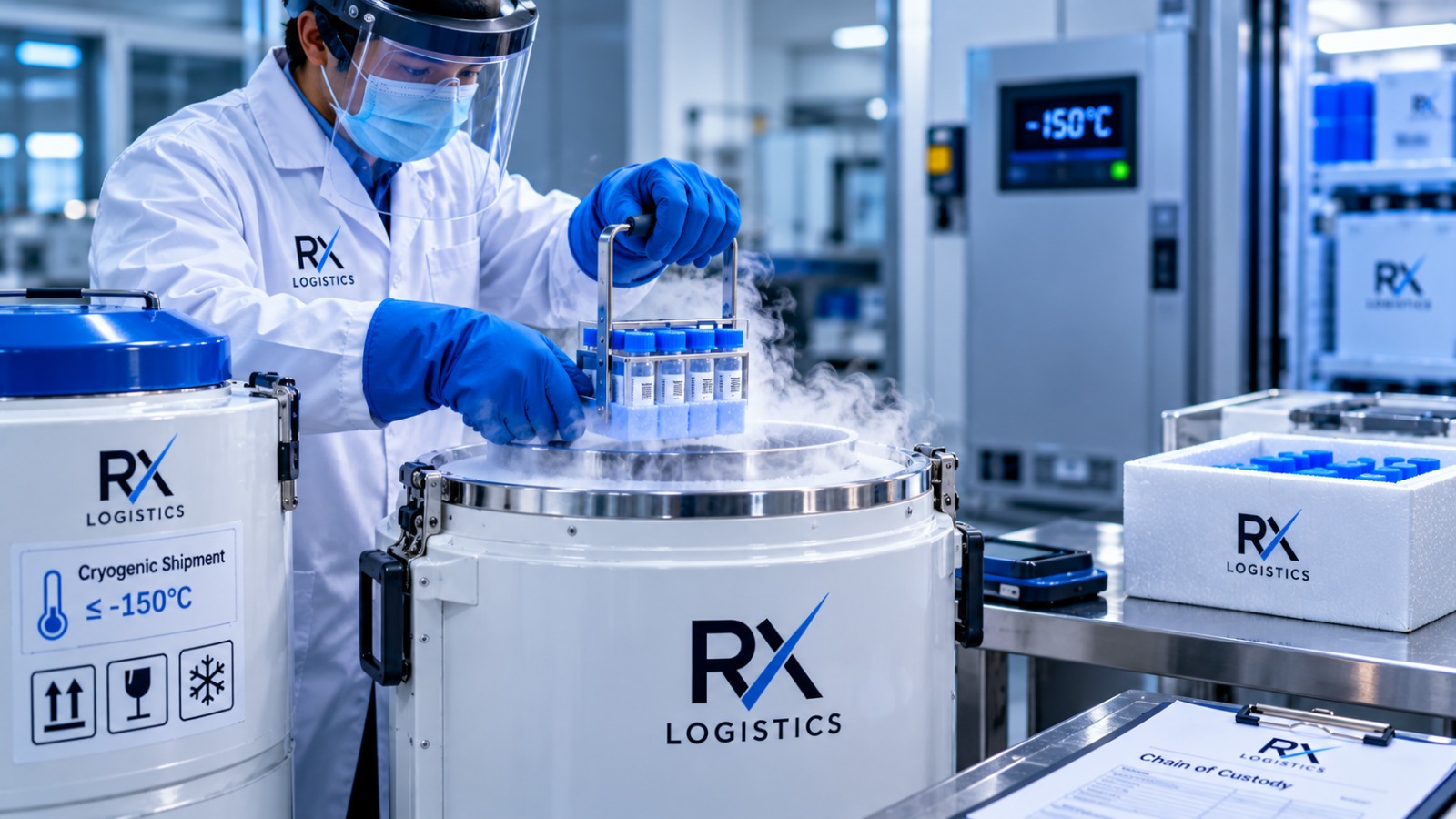
Cryogenic shipping is not an extension of conventional refrigerated transport. It relies on specialized Liquid Nitrogen (LN2) Dry Shippers. Inside these double-walled stainless steel dewars, hydrophobic absorbent material wicks liquid nitrogen, creating a cold, non-spillable nitrogen vapor environment maintaining −150°C or colder for up to 10–14 days.
4. Chain of Identity (COI) vs. Chain of Custody (COC)
Chain of Identity (COI)
Maintains the immutable link between the individual donor/patient and their unique biological therapy across every extraction, manufacturing step, label change, and hospital ward.
Chain of Custody (COC)
Records the sequential chronological transfers of physical custody: courier driver identity, security handoffs, airport tarmac escorts, temperature validations, and delivery timestamps.
5. RX Logistics' Support for Advanced Therapies
RX Logistics provides dedicated ATMP logistics coordination, validated dry vapor shipper conditioning and charging, real-time cryogenic temperature and tilt monitoring, direct tarmac handling, and 24/7 mission control oversight from apheresis collection to final bed-side infusion.
Conclusion: Supporting Next-Generation Medicine
Advanced therapy logistics is not simply about moving a product—it is about orchestrating a precision-timed, cryogenically validated journey that directly enables curative treatments for patients around the globe.